Word games and activities for adults with aphasia after a stroke
Large-print word finding workbooks and everyday tasks to practice at home with an adult with aphasia after a stroke, alongside their speech therapist.
After a stroke, the words are often still in there and just won't come when they're called. A lot of families end up at the kitchen table with a pad of paper, trying to think of something to practice that isn't a children's workbook. This page is for the person sitting on the other side of that table.
One thing first. Workbooks don't treat aphasia and they don't replace speech therapy. The speech therapist knows which kinds of exercises fit this week and which ones are too much. Show them a page before you start, and follow what they say over anything written here or in a book.
What practice at home usually looks like
Most home practice is short and plain. Name things in a category. Finish a phrase you've heard a thousand times, like salt and pepper. Fill in the missing letters of a word. Look at a picture and say what it is. Describe an object without naming it. Pick the one in a row that doesn't belong and say why.
A few things make it go better for most families. Keep sittings to ten or fifteen minutes and stop while it's still going well. Say the word out loud first, then write it, and count either one. Let pauses be long. If a page is too hard today, skip it, because it'll still be there tomorrow. And give a cue instead of the answer: a first sound, a gesture, or the start of the phrase.
Workbooks made for adults
A lot of word practice books look like they were made for a second grader, which is the last thing a grown adult wants handed to them. Ours are made for adults. Every page is one task, printed large, with room to write, and there's no timer and nothing to score. Each one is a paperback on Amazon, and most are also a printable on Etsy, so you can print a single page again when it gets worn out, or print the same page twice because it went well.
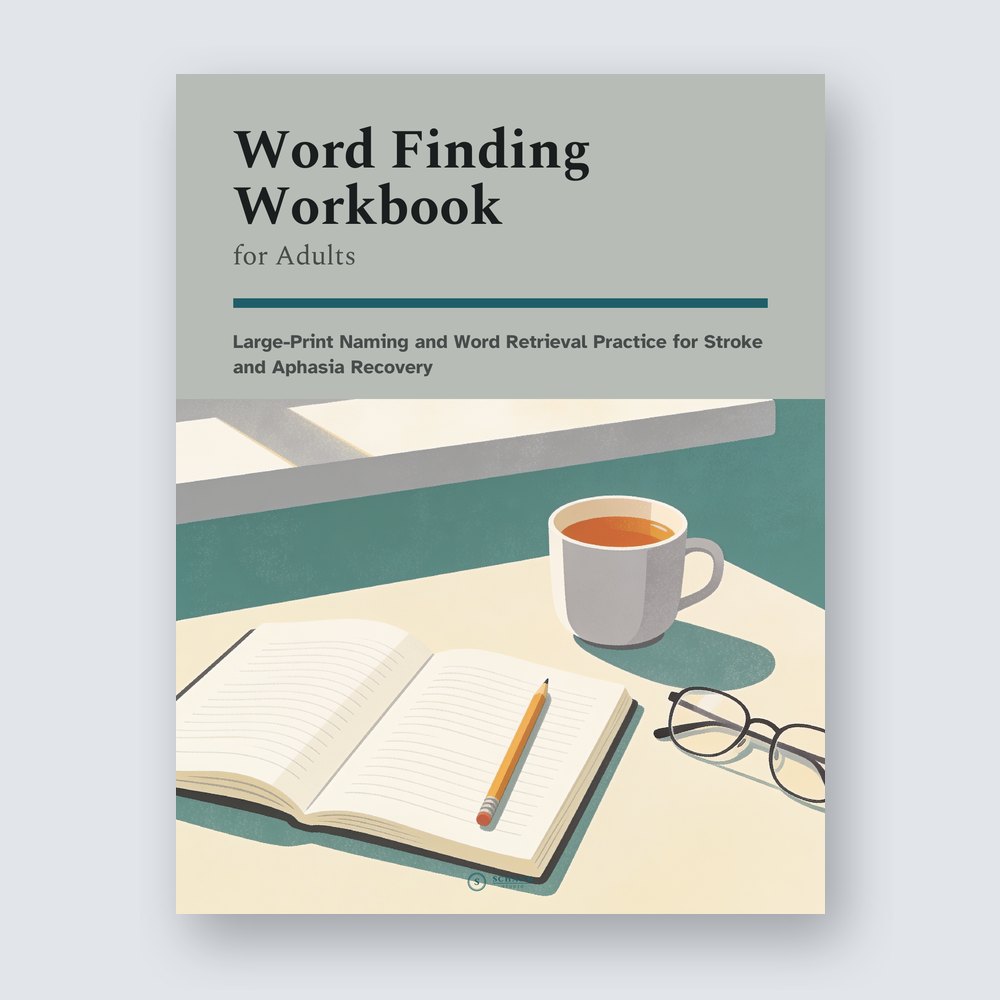
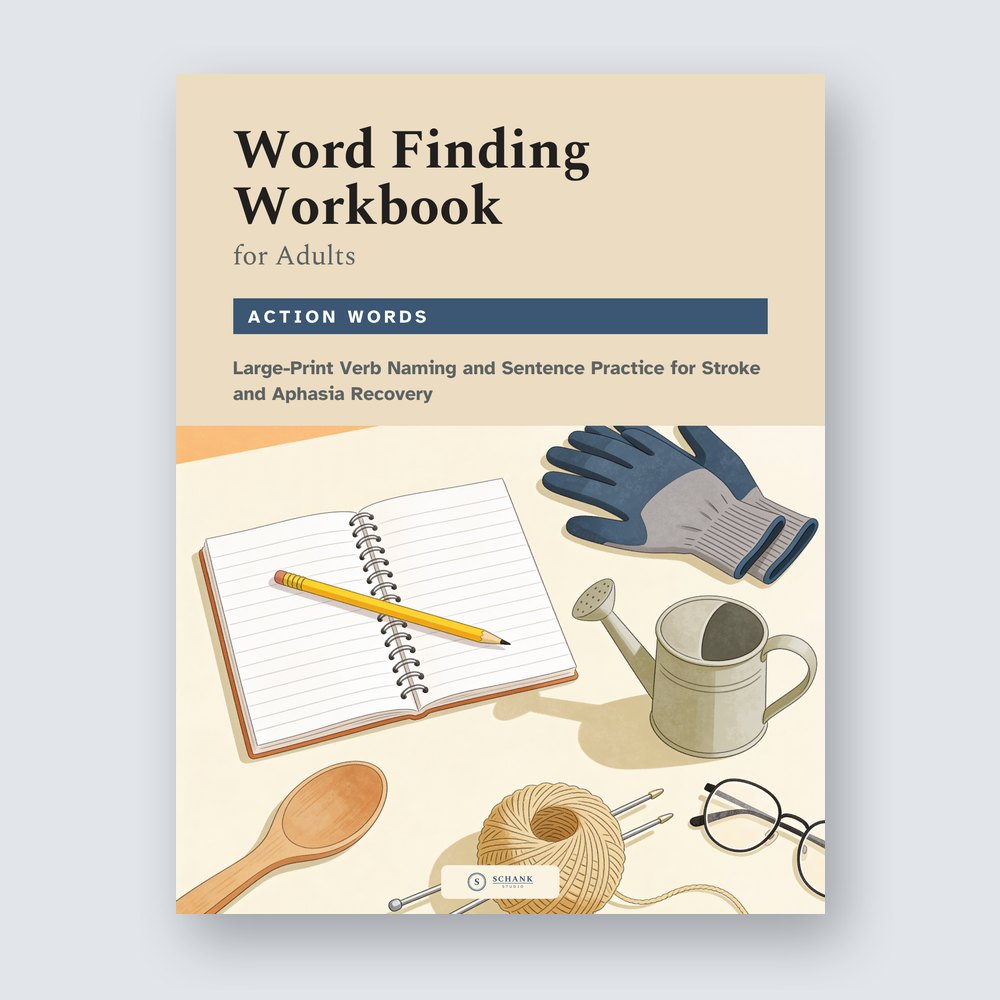
Once nouns are going well, a lot of people find verbs are harder. That's what the second book is for.
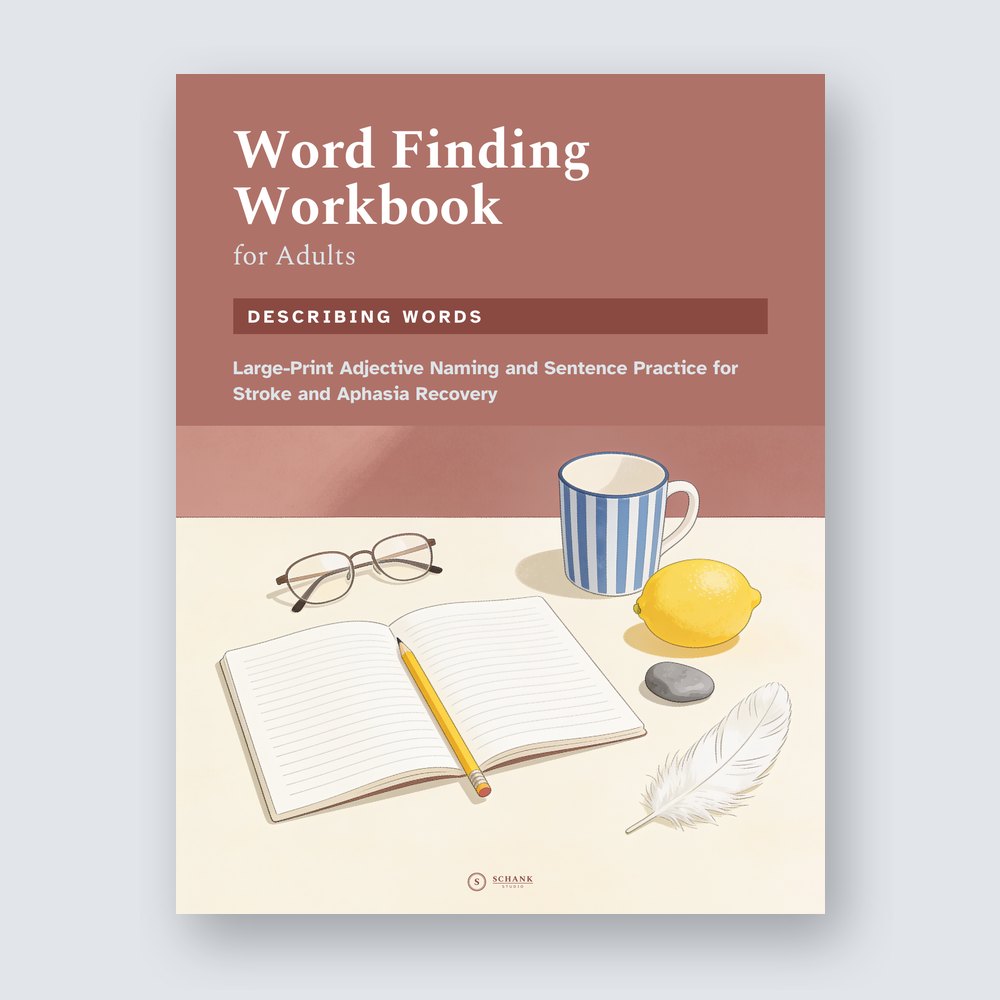
The third book is the describing words: hot, heavy, striped, kind. It works the same way, and you don't need the first two books to start it.
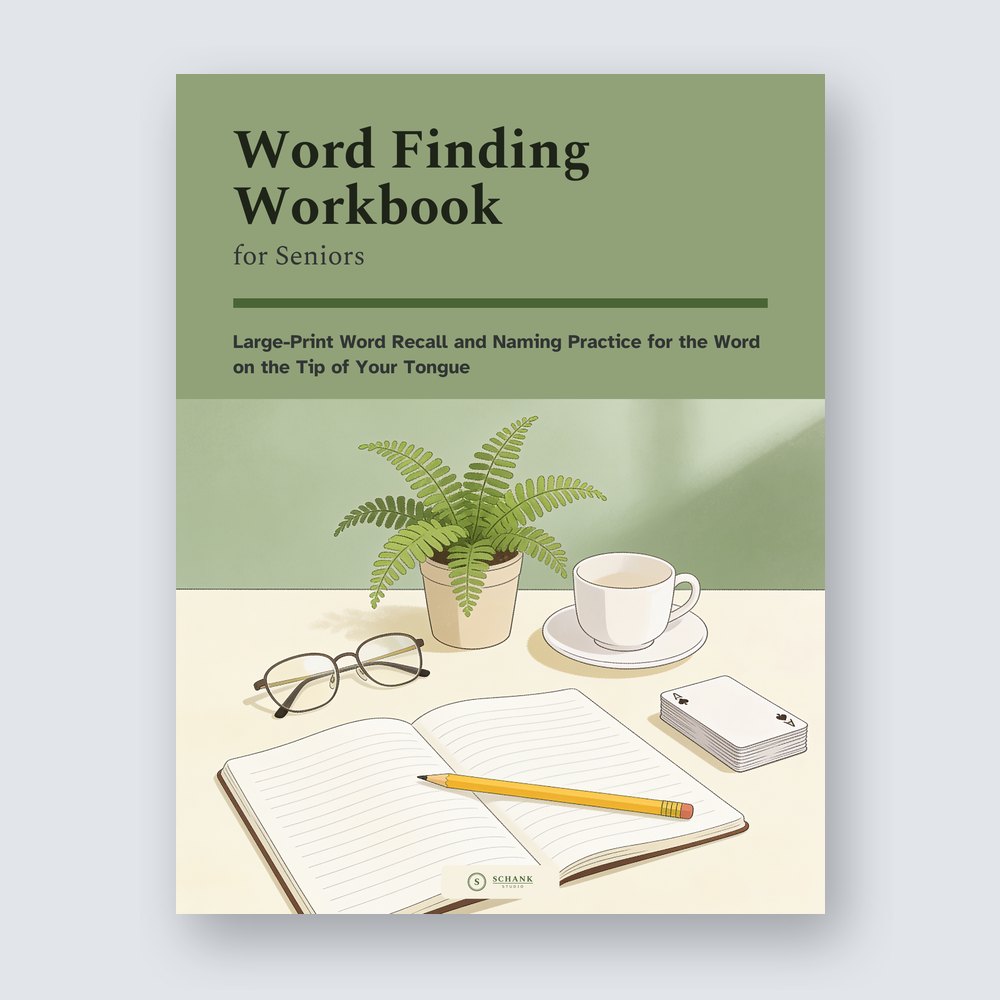
For a parent or grandparent who just wants the word that's on the tip of the tongue, without the feeling of homework, the seniors edition uses the same eight kinds of exercise with pictures of the garage, the kitchen, the house and the yard.
When the words come back but the day doesn't
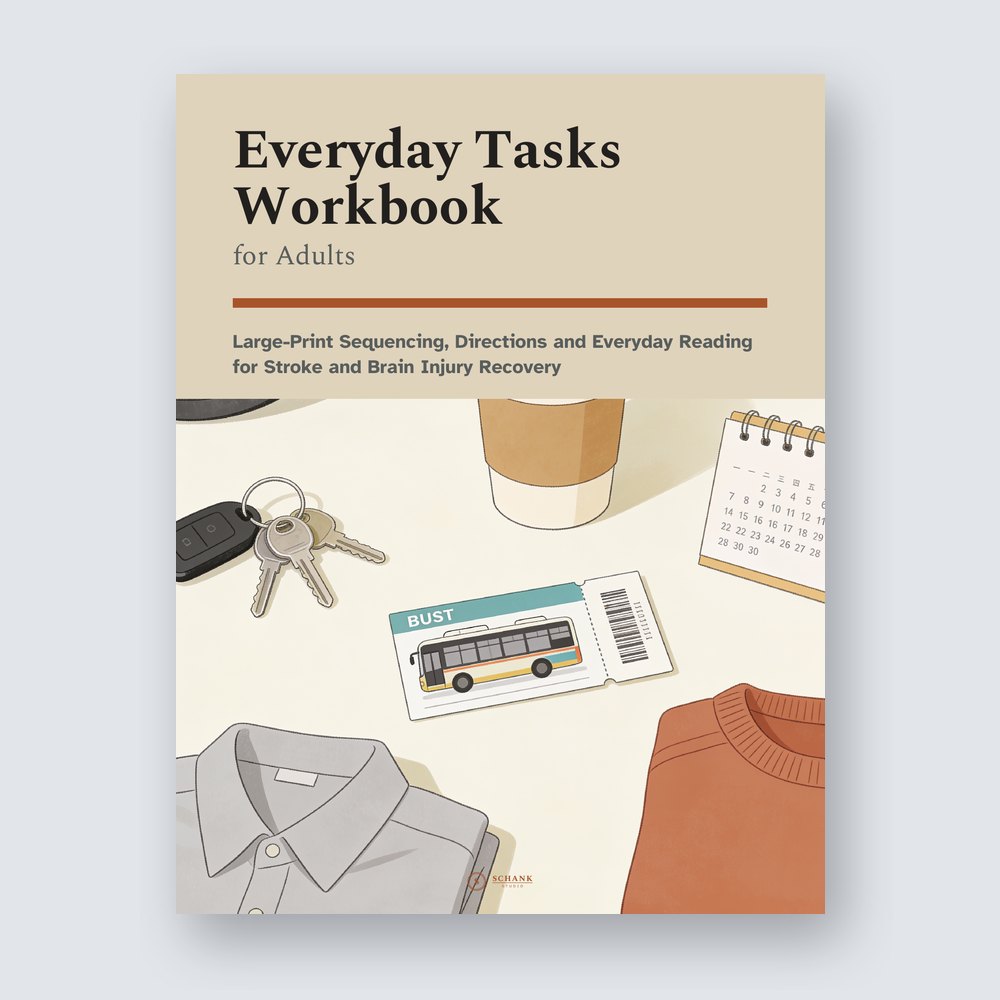
Some people get their words back and still find that making a cup of tea, following three instructions in a row or reading a prescription label is harder than it used to be. Those are separate skills, so they get practiced separately.
A few things that help the helper
Sit beside them rather than across, so it feels less like a test. Read the instructions together the first time and then stop explaining. Keep the answer key handy, but use it as a cue: read the answer, cover it, and say it again. That counts as practice. Keep a short note of what went well each day, because the speech therapist will want to know, and because in a month you'll want to see it too.
Don't correct handwriting. Print, cursive, one letter or a little drawing all get the idea out. If they get tired or frustrated, stop and do something else. The point is to come back tomorrow.
Try a few pages first
If you'd like to see whether this kind of page suits the person you're helping, there's a free sample below: six pages from the Word Finding Workbook for Adults, ready to print. Take it to the next therapy appointment and ask what they think.